

CONTENTS (6)
01 First, the right question: how will you use fuel in your daily routine?
The difference between a pellet stove and a solid fuel stove is not just the type of fuel. How you start the fire, how much attention you need to give it throughout winter, and how well the stove fits into your daily life all affect your choice. Here, solid fuel stoves refer to manually fed models that burn wood or coal.
- If you find loading fuel every day, adjusting the airflow, and clearing leftover embers burdensome, comfort may be your top priority.
- If you expect to spend long periods away from home during the winter, choosing a stove that makes refueling and fire control easier may influence your decision.
- Review your fuel storage, electricity use, chimney maintenance, and cleaning habits.
- Evaluate not only the size of the area you heat, but also your home's insulation, windows, and how often you use the stove.
02 How does a pellet stove work?
P pellet stoves are fed from a hopper containing small, uniformly compressed wood pellets. In most models, the feeding system, ignition, and air control are managed electronically. This means you do not need to add wood or light the fire by hand each time; the stove maintains its operating cycle.
- **Daily use:** Automatic feeding makes operation easier by ensuring a steady supply of fuel.
- **Fuel storage:** Pellets are generally more compact to store. Hopper capacity can be planned according to how frequently the stove is used.
- **Combustion pattern:** Proper use and air control generally ensure more consistent combustion.
- **Power requirement:** Electricity is required for models with automatic feeding, a fan, and automatic ignition. During power outages, the appliance's operation should be checked according to the user manual.
- **Maintenance:** The hopper, burner, glass, and flue should be inspected regularly. It is especially important to regularly clean the dust left over from used pellets.
When choosing a pellet stove, consider not only automation but also how much effort you are willing to devote to fuel supply and cleaning. A system that you do not want to check every day and that requires frequent maintenance in the long run does not provide much convenience.
03 Solid fuel stove: powerful heat and traditional use
Solid fuel stoves generally run on wood, coal, or compressed fuels specified for the model and are usually loaded by hand. Monitoring the fire, adjusting the airflow, and keeping it burning for long periods are the basic features of these stoves. Although output varies by model and fuel type, they are favored by those who need powerful heat.
- **You're in control:** You can adjust the fire intensity, fuel load, and airflow yourself.
- **Visual heating:** Seeing the flames and embers is an important part of the traditional stove experience.
- **Fuel supply:** Wood or coal must be stocked regularly and stored under suitable conditions.
- **Maintenance effort:** Ash, glass, and flue cleaning, along with checks of the air channels, should be carried out at regular intervals.
- **Combustion efficiency:** Using damp fuel incorrectly can increase smoke and buildup; it is important to choose fuel as specified in the manual.
On long winter days, the powerful heat and enjoyable, traditional experience these stoves offer stand out. However, loading fuel every day, removing the ash, and checking the flue takes more time.
04 How do the two options compare in your daily life?
Reviewing your own daily routine is the most useful way to distinguish between the two options. Your priorities may differ depending on whether you want to wake up to a fire already burning, work from home throughout the day, or spend time sitting beside the stove. From an expert's perspective, the right choice is not the most advanced system, but the one that best suits your habits.
- **If you are looking for regular use with minimal intervention**, a pellet stove is generally a better starting point.
- **If you prefer to stay in control of the fire**, a solid fuel stove may feel more natural.
- **If you will be away from home for long periods**, you should review the operating and safety instructions in the user manual for both options.
- **Compare the total cost** by considering fuel prices and supply, electricity consumption, cleaning frequency and installation expenses together.
Heating capacity and usage pattern should be considered together in open-plan homes, frequently used living areas and well-insulated spaces. Rather than looking only at the area in square metres, you should also take into account heat loss, room layout and ventilation constraints.
05 Gold 12 kW Kuzine: medium-scale technical review
The stated technical data for Baba's Stove Gold 12 kW Kuzine show a 12 kW output, a heating area of 60–70 m² and a hopper capacity of 22 kg. The model also features an oven and single-pane glazing. These figures provide the basis for assessing whether the stove is suitable for the home's heating needs. However, the heating area depends on factors such as insulation, the number of windows, air leakage and operating duration.
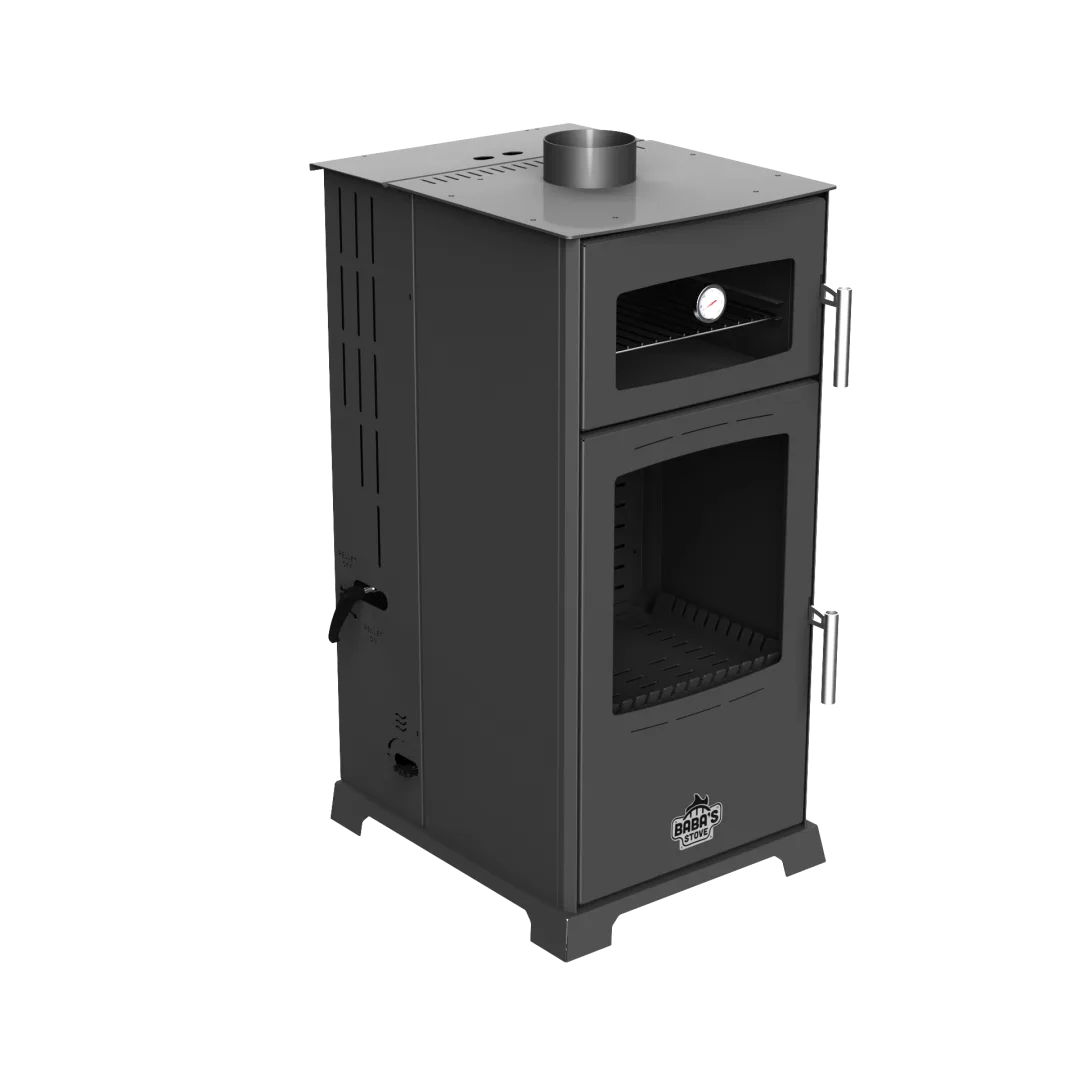
The specified heating area does not mean that two houses with the same floor area will have equal energy needs. Heating power requirements can vary, especially in corner houses, homes with many windows, or poorly insulated buildings. The product information for the Gold 12 kW Kuzine does not include the supported fuel type or detailed installation requirements; these should be confirmed with the authorized team before purchase.
06 Frequently asked questions
Is a solid-fuel stove always more economical? It is not possible to say this definitively. The current fuel price, supply availability, operating hours, efficiency, and maintenance requirements should be evaluated together. It would not be correct to base the decision solely on the initial purchase price.
Can a pellet stove operate continuously while we are not at home? Automatic feeding makes this easier; however, it does not mean that you can leave the stove unattended. The operating periods and safety conditions specified in the appliance's user manual must be followed, and precautions such as smoke and carbon monoxide alarms should also be considered.
What criteria should I consider for a 60–70 m² home? Evaluate the heating power based on the heating area, together with the home's insulation, heat loss, and usage patterns. The specified 60–70 m² heating area for the Gold 12 kW Kuzine is a starting point for this assessment. The project conditions should be examined to determine its exact suitability.