

CONTENTS (6)
01 What is a pellet stove
Pellet stoves are heating appliances that run on compressed wood pellets. A pellet is a small, cylindrical piece of fuel produced by compressing sawdust and other wood waste. The stove burns these pellets and heats the surrounding area.
Low moisture and a compressed structure ensure clean combustion. Pellet stoves achieve 80–94% combustion efficiency: almost all the fuel burns. When 1 kg of pellets is burned, approximately 40 grams of ash remain.
02 Dry and hydronic systems
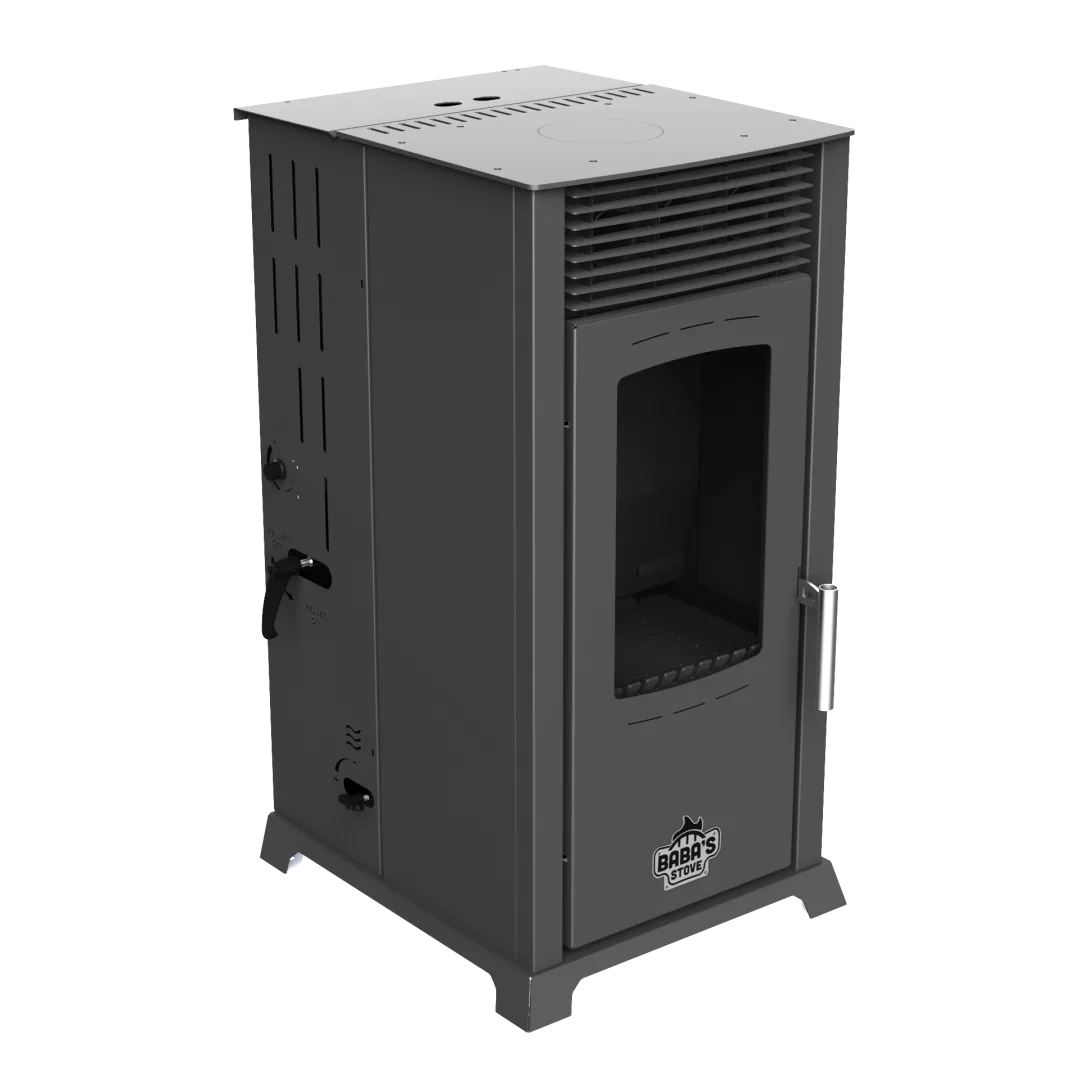
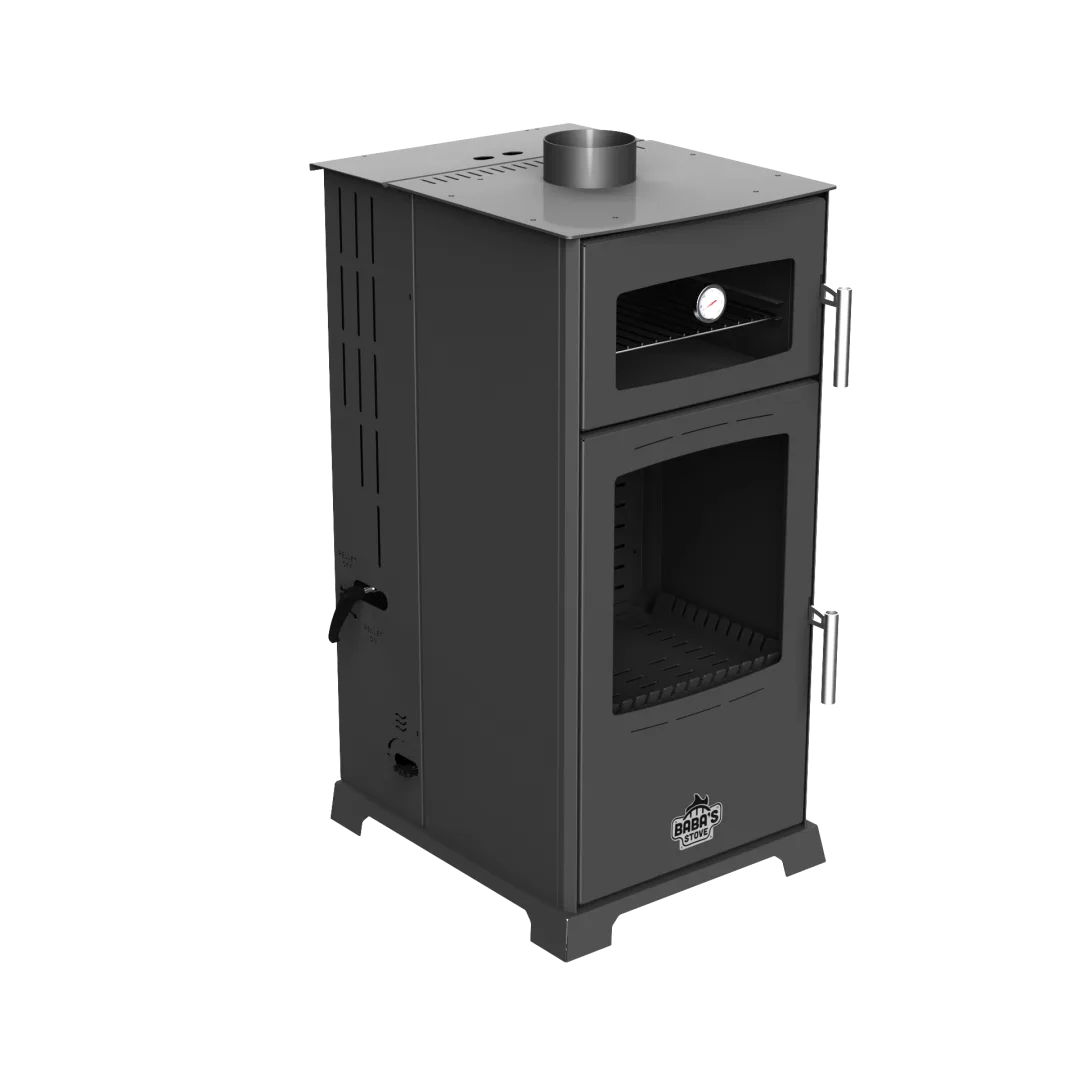
Dry-system stoves are appliances that heat up their body like a conventional stove. They are available in electrically controlled automatic and non-electric manual versions. Manual stoves must be connected to a chimney with a natural draft; once lit, the pellets automatically continue to drop into the combustion chamber.
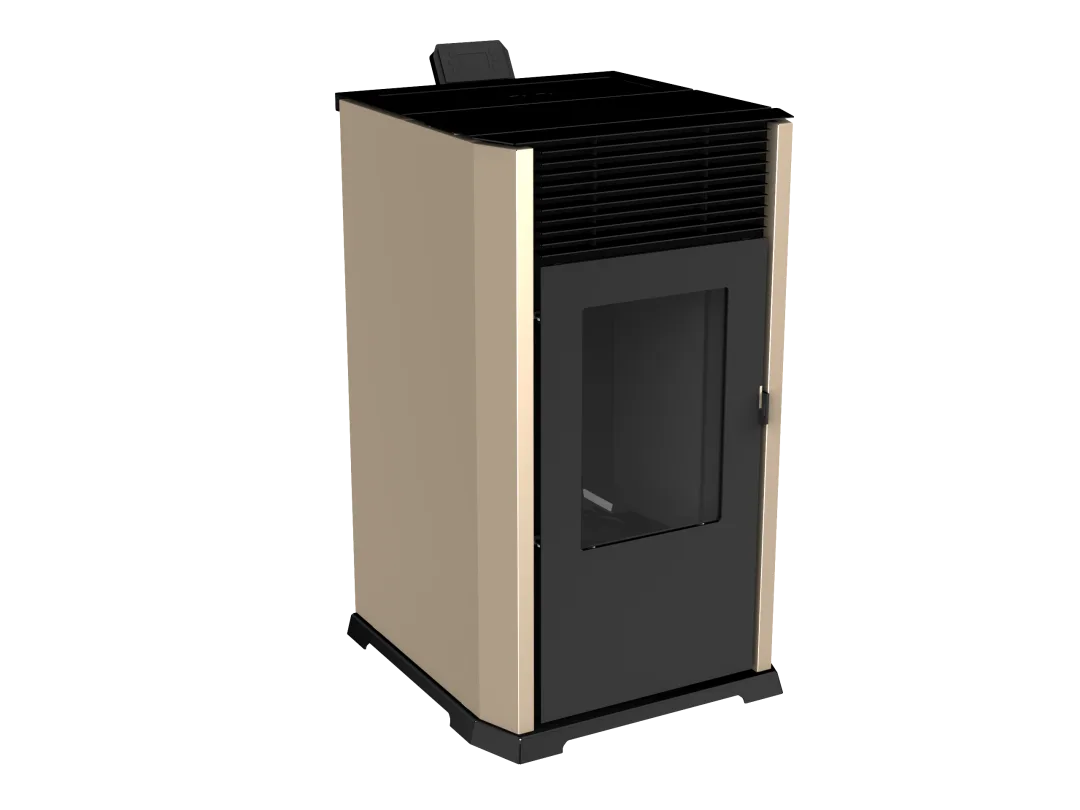
Hydronic systems heat the water in the body and distribute the heat through radiators or underfloor heating. Ignition, pellet feeding, clinker removal, and water circulation are electronically controlled.
03 Operating principle
- a.Hopper. The user fills the hopper with pellets.
- b.Feeding. In manual models, pellets flow into the combustion chamber by gravity; in automatic models, a motor and auger feed them into the chamber.
- c.Ignition. In manual models, with gel or wood wool; in automatic models, with an electric igniter.
- d.Combustion. Full combustion is reached within 10–15 minutes, while pellet feeding sustains the burn.
- e.Heat control. In manual models, this is done with an air damper, not by reducing the fuel flow.
04 Clinker, ash, maintenance
Natural resin in the pellets liquefies as it burns, settles at the bottom of the combustion chamber, and slows the air intake. This is called clinker; it forms roughly every 6 hours. In manual stoves, the user cleans it with a single action, while automatic models have the system handle it.
05 Choosing the right stove
First, consider the floor area. An 8 kW stove heats approximately 40–50 m², while a 12 kW stove heats 60–70 m². For homes of 125–250 m², Combi models heat the entire home. Next comes the hopper capacity: a larger hopper means less frequent refilling. Finally, look for CE certification and an energy efficiency certification of at least A+.
06 Frequently asked questions
Do manual stoves require electricity? No. A chimney with a natural draft is sufficient. The fan is optional.
How is the stove maintained? A manual stove requires only an annual internal cleaning and, if needed, a coat of maintenance paint.
All questions →